
Maritime Salary Trends 2026: What You Need to Know
The Global Maritime Salary Landscape in 2026
The maritime industry has entered one of the most competitive talent markets in recent years. As shipowners invest in decarbonization, alternative fuels, and increasingly advanced vessel technologies, the demand for experienced and highly qualified seafarers continues to grow. At the same time, geopolitical tensions, changing trade routes, and expanding global fleets have intensified the competition for skilled officers.
This evolving market has shifted the balance in favor of qualified maritime professionals. However, salary growth has not been consistent across all vessel types or ranks. Professionals with specialized expertise—particularly in LNG, LPG, offshore operations, and dual-fuel propulsion systems—are benefiting from significantly higher remuneration than those working in more conventional shipping sectors.
Whether you are an experienced Master planning your next career move, a Chief Officer preparing for promotion, or a junior officer deciding which sector to pursue, understanding today’s salary trends is essential. Knowing where the market is heading will help you make informed career decisions and maximize your long-term earning potential.
An Industry Facing a Growing Talent Gap
One of the main drivers behind increasing salaries is the worldwide shortage of qualified officers. Industry reports estimate that the current shortage already exceeds 8%, with forecasts indicating it could approach 10% by 2030 if recruitment and retention challenges continue.
Several factors are contributing to this situation, including:
- Continued expansion of the global fleet.
- Increasing numbers of experienced officers reaching retirement.
- Longer leave rotations and improved work-life balance expectations.
- Fewer young professionals entering maritime careers.
- Geopolitical events causing longer voyages and requiring additional vessel capacity.
- The introduction of more technologically advanced vessels requiring specialized competencies.
These combined factors have created intense competition among shipowners to attract and retain experienced seafarers.
Salary Growth Is Not Equal Across the Industry
Although salaries continue to rise across most sectors, the increases vary considerably depending on vessel type and technical specialization.
Traditional sectors such as dry bulk and container shipping continue to offer competitive salaries, but the strongest growth is currently seen in highly specialized fleets.
Professionals serving on LNG, LPG, offshore support vessels, and dual-fuel ships are commanding substantial salary premiums due to the limited availability of officers with the required certifications and operational experience.
Key Market Indicators for 2026
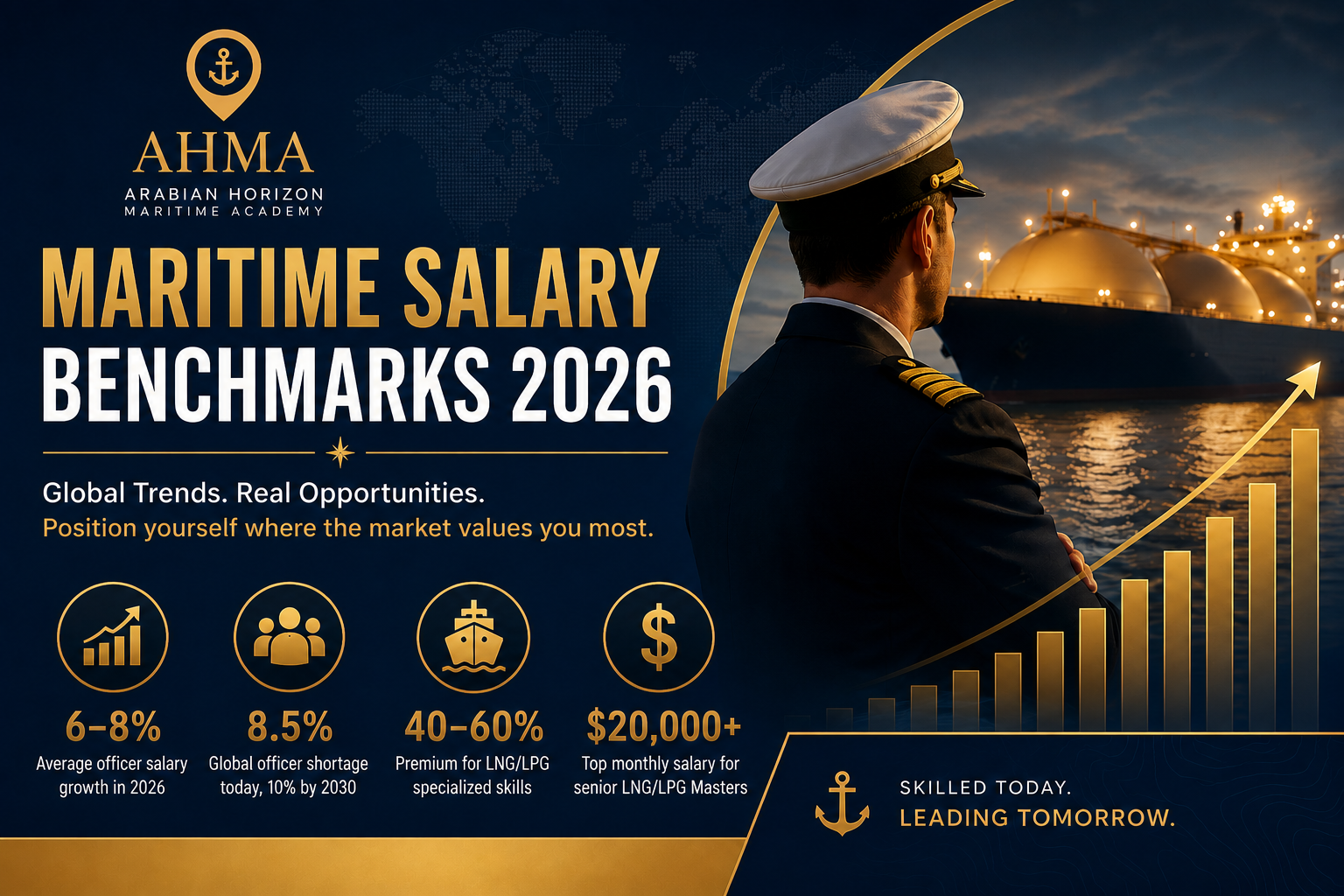
- 6–8% projected average salary increase for officers across modern international fleets.
- 8.5% estimated global shortage of qualified officers, with projections approaching 10% by 2030.
- 40–60% salary premium for officers with LNG/LPG or other specialized technical expertise compared with many conventional dry bulk positions.
- More than USD 20,000 per month for senior Masters serving on certain LNG/LPG vessels.
Specialization Is Becoming the Biggest Salary Driver
The maritime industry is evolving rapidly, and technical specialization has become one of the strongest factors influencing compensation.
As shipping transitions toward cleaner fuels and increasingly sophisticated vessel systems, professionals with expertise in LNG, LPG, dual-fuel propulsion, DP operations, offshore energy, and advanced automation are becoming increasingly valuable.
Rather than representing a temporary market fluctuation, this trend reflects a long-term transformation of the industry. Officers who continue investing in specialized qualifications and technical competence are expected to remain among the highest-paid maritime professionals throughout the coming decade.
Salary Benchmarks by Rank (Monthly, USD)
| Rank | Dry Bulk | Container | Tanker | LNG/LPG | Offshore |
|---|---|---|---|---|---|
| Master | $9,500–12,500 | $10,500–14,000 | $12,000–16,000 | $15,000–20,000 | $10,000–14,000 |
| Chief Engineer | $9,000–12,000 | $10,000–13,500 | $11,500–15,500 | $14,500–19,000 | $9,500–13,500 |
| Chief Officer | $6,500–8,500 | $7,000–9,000 | $8,000–10,500 | $9,500–13,000 | $7,000–9,500 |
| 2nd Engineer | $6,000–8,000 | $6,500–8,500 | $7,500–10,000 | $9,000–12,500 | $6,500–9,000 |
| 2nd Officer | $3,200–4,200 | $3,400–4,500 | $3,800–5,000 | $4,500–6,000 | $3,500–4,800 |
| 3rd Engineer | $3,000–4,000 | $3,200–4,300 | $3,600–4,800 | $4,300–5,800 | $3,300–4,600 |
*Figures represent monthly gross wages in USD. Individual packages vary based on flag state, owner nationality, contract duration, and candidate experience.
